PCT – Highway 74 to Apache Springs

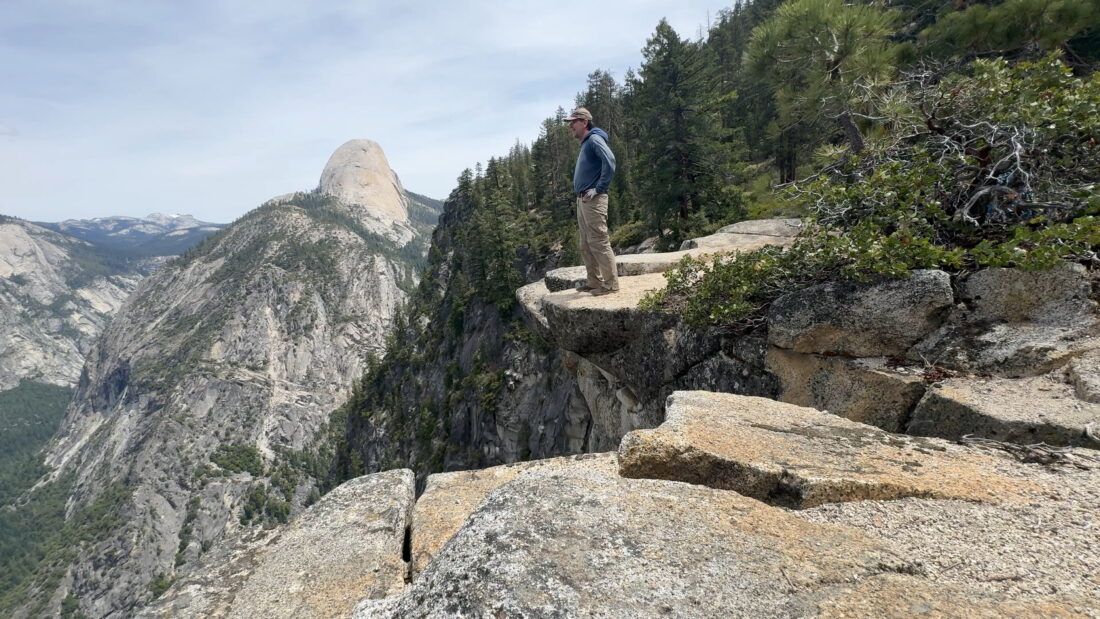
I awoke just before the alarm went off and quickly got ready.  I was driving up to Idyllwild and picking up Sara to shuttle her back down to the Highway 74 trailhead before joining her once again on the Pacific Crest Trail. However, this time I would not just be day hiking; I would be backpacking this section of the trail all the way back to Idyllwild. I grabbed breakfast and coffee for Sara and me at the 24-hour McDonald’s in Temecula, then continued up the mountain to pick her up at the rental cabin she was sharing with some other thru-hikers. I got there right around 6 am, and Sara was soon in the passenger seat, ready to hit the trail once again. We pulled into the trailhead parking lot and quickly gathered our gear. We had a long, hard day of hiking ahead of us, and we wanted to get moving. Off to our north, we could see San Jacinto beckoning. We passed a stone monument with a map of the PCT and a memorial for Andy Elam, who, unfortunately, was murdered nearby back in 1989.

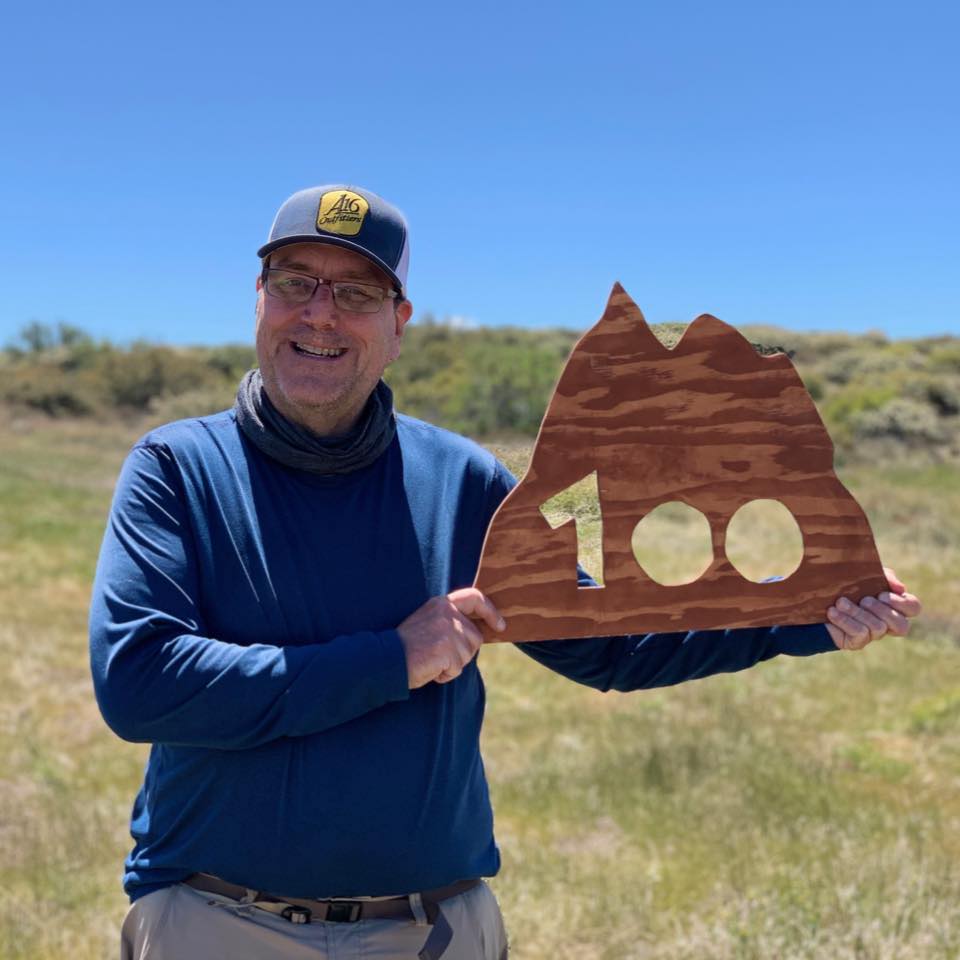
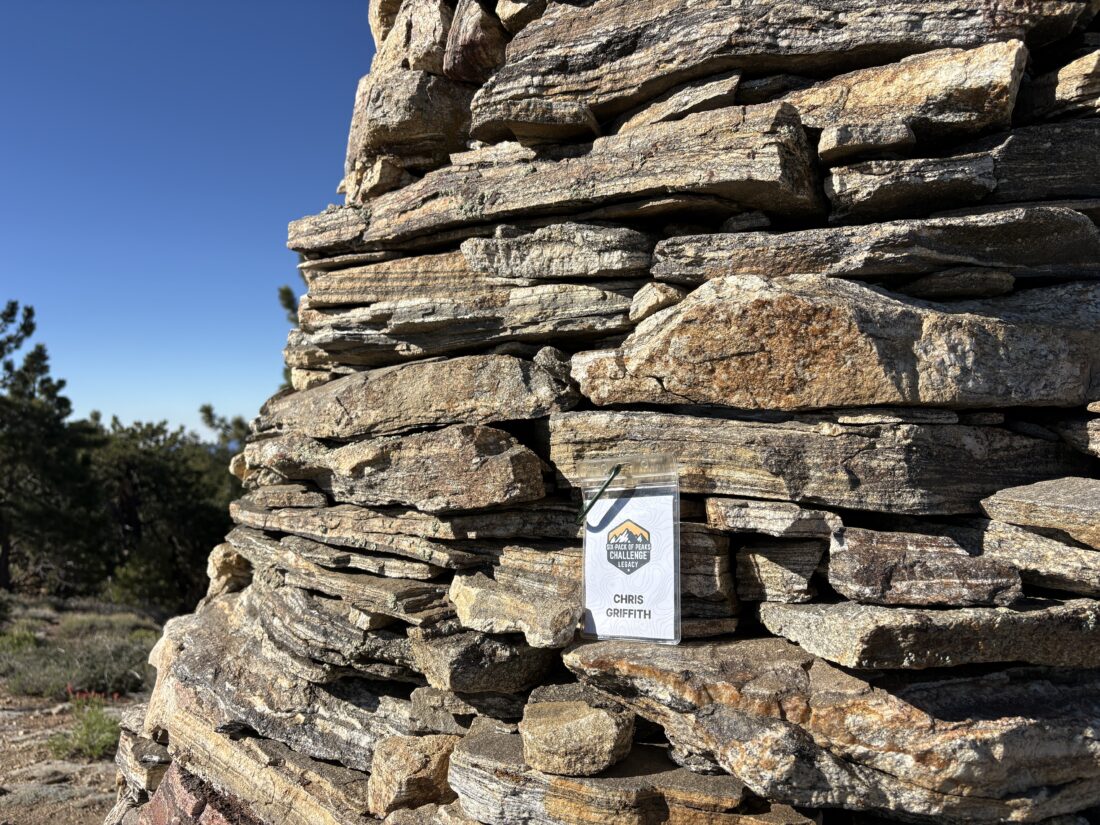
The trail started off mellow for a bit before the long climb began. We passed someone who had found a nice spot for the night. Sara continued filling me in on the events since I last saw her up on Mt. Laguna. Before too long, we came to the junction that one would take to summit Ken Point. While I was hoping to climb several side peaks on this trip, this summit was a bit too far for my liking. We enjoyed the views, mostly to the west. I tried to spot the peaks that I had climbed the week before. After a couple more miles, I came to the use trail that would take me to the summit of Lion Peak. This climb would be an out-and-back, so I dropped my pack off to the side of the trail and followed the cairns to the summit. I found the register and a nice wooden sign. I snapped a few photos, signed the register, and hustled back down. We still had a lot of miles to cover. Sara was waiting for me under the shade of a nearby tree.

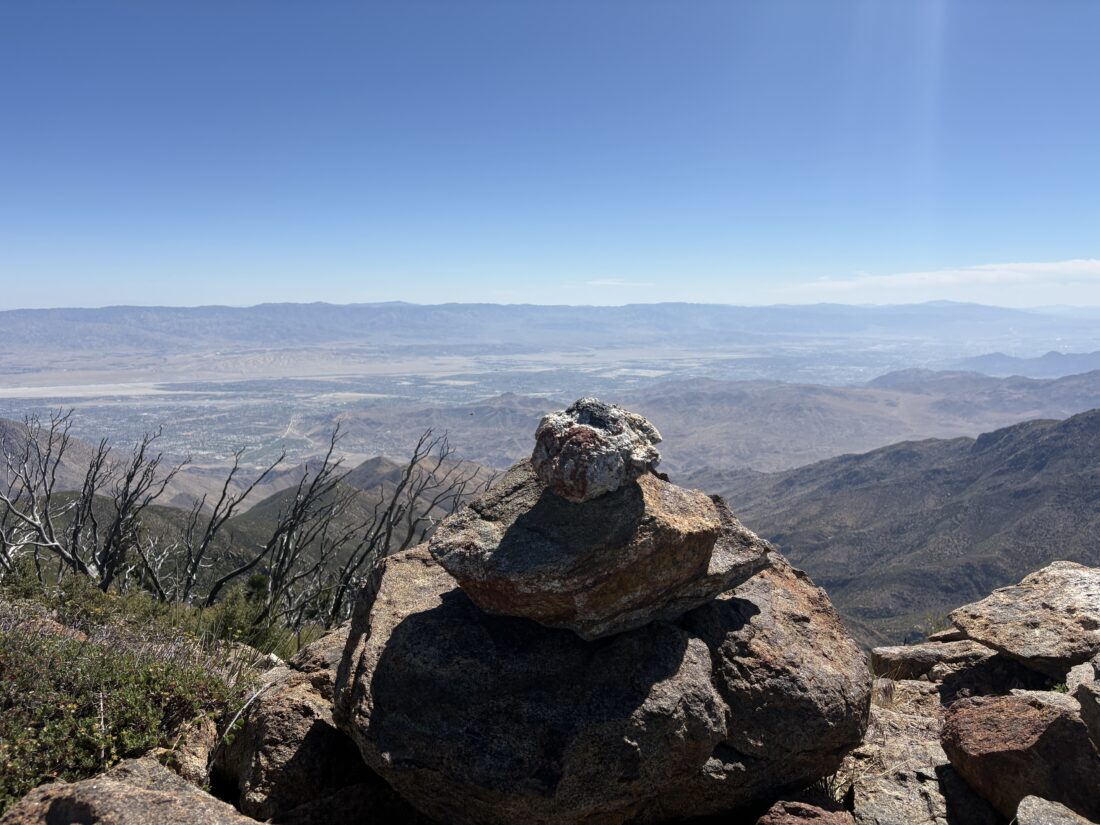
About 1/2 mile later, we reached the junction with the use trail to Pine Mountain. I debated on this one, as the trip reports indicated it was a bit brushy and a bit further off-trail. In the end, I opted to skip it. The day was getting warmer, and I was trying to be mindful of my water and energy. Just to the north, Pyramid Peak was calling my name. Unlike the climb to Lion Peak, this time I kept my pack on, as the route made more sense to climb it as a point-to-point. The use trail to the summit was pretty well marked. Once at its rocky summit, I had some fantastic views. Found the benchmark, two reference marks, and the register. I took a short break and enjoyed a snack before heading down the north ridge, again following a good use trail.

Sara had passed me while I was on the summit, but we planned to rendezvous at the junction for Cedar Springs. I found her enjoying her lunch in the shade with some other thru-hikers. One had just returned from the mile hike down to the spring to refill their water, and others were getting ready to make the same trek. Our original plan was to hike down and camp there for our first day, but it was just a bit after 1 pm, and we both agreed it was too early to call it a day. We could certainly top off our water, but the thought of those 2 miles was not appealing. Instead, we opted to make the short hike to Eagle Spring and fill up there. Using the references in the comments on FarOut, we found the lone pine tree and the use trail that led to a trickling spring and a water trough. Sara used the spring, while I carefully filled my CNOC from the trough, trying to keep the algae away. Once we had filled our bottles, we climbed back up to the PCT and continued on.

Since we had changed our initial plans, I was also reviewing my peak bagging side quests. The next peak on my agenda was Palm View Peak. On paper, this looked to be the easiest of all the ones I hoped to climb. Very little elevation gain and barely off-trail. I dropped my pack and set off. Sara kept pushing northward, knowing that I would catch her on the big climb that lay ahead of us past Fobes Saddle. The hike over to Palm View Peak started nicely, with some nice shade from the trees, until I hit a wall of brush. I tried to match my position to the tracks I had saved, but nothing really indicated a route through them. Relying on bushwhacking talents, I picked my way through until I spied a small mound of rocks indicating the summit. The register was soaks, and the views were less than stellar. I snapped a few photos and pushed my way back out. 

The trail descended to Fobes Saddle, and the sun was slowly sinking behind Thomas Mountain. Spitler Peak loomed to my north. This was on my list, but there was no time to climb its steep slope and still make camp at Apache Springs. If I were solo and had climbed Ken Point and Pine Mountain, I probably would have made Cedar Springs later in the afternoon, so stopping there would have made sense. I knew there was a closer trailhead for this peak, so returning would not require re-hiking much of the PCT. I was now a good distance ahead of Sara, so we were coordinating digitally. I had some water left, so I did consider stopping short of Apache Springs for the night, then dropping down to it in the morning to fill up for the day. FarOut indicated a campsite before the junction with Apache Springs, but when I reached it, it seemed pretty full and exposed. So, I pushed on toward Apache Springs. At the junction, some folks had set up camp. I had been leapfrogging with some, so I asked them to let Sara know that I was headed down to the spring. 

Apache Spring sits about 0.6 miles off the PCT and has a 520-foot elevation loss. As I started down, I hoped there was a spot for my tent, since I was not keen on hiking back up to the junction. Partway down, I passed one tent just off to the side of the trail. I thought to myself, great, if someone is camping here, are there even any spots near the spring? But as luck would have it, there was no one camped there! I found a nicely sheltered spot, since I knew it was going to be breezy overnight (25-mph gusts were predicted). After I got my tent set up and secured, I walked the few minutes to the spring itself. It was getting dark, but I thought I had enough light, so I left my headlamp behind. I gathered some water and hauled it back to the campsite. Once there, I saw how slity it was. When I scooped up the water, I disturbed the silt. I let it settle some before dumping out a portion and starting to filter it. I was pretty beat and decided not to spend the time or water on cooking dinner. Instead, I ate my Walking Tamale, a beef stick, and my mini-apple pie for dinner, then turned in for the night under the glow of the lights from Palm Springs. I had gotten a message from Sara that she had reached the junction and was camping up there. With that, I turned off my headlamp and drifted off to a well-earned sleep. I covered 19.2 miles in 13:03 total time and an elevation gain of 5234 feet.


Buy Me a Coffee at ko-fi.com

I am an avid peak bagger, sometimes backpacker, and former sea kayaker living in San Diego. I am the co-author of Urban Trails: San Diego, available now!

In 2019, I became the third person to complete the San Diego 100 Peak Challenge. Not stopping with that accomplishment, I set my sights on the harder San Diego Sierra Club 100 Peak list, which I completed in 2021. In addition, I have conquered several Six-Pack of Peaks challenges (SoCal, San Diego, Central Coast, and both the Arizona-Winter and Arizona-Summer).

I am looking forward to exploring new summits and new adventures across the southwest. 

A loop around Cush-Pii

My friend Becca was supposed to be heading out on a two-day, one-night backpacking trip. Unfortunately, that adventure was canceled, but since her pack was mostly ready to go, she asked if I might take her on a training hike. I thought, why not do a loop around and up Cush-Pii (aka Stonewall Peak)? It is a nice mix of some flatter sections and a bit of gain to test out the legs and the lungs. We drove out to the Paso Picacho campground and parked in the day-use area. After paying the $10 day-use fee and using the facilities, we crossed the highway to the trailhead. Becca also wanted to practice her navigation skills. I recommended that we do the loop clockwise and had her point us in the right direction. We hiked along, chatting about various things from family to hiking. At the next junction, I had her figure out once again where we were and where we needed to go. Since we were now on the California Riding and Hiking Trail, I gave her a brief history of it. That in turn led to talking about backpacking it through Joshua Tree.

At our next junction, we took a short break as the climb was about to begin. Becca pushed herself upward with her heavy pack on her shoulders. Thankfully, I got her to leave 2 liters of water in the car.  She is preparing to overnight on San Jacinto, so I was explaining where the water sources are and about how much she might need. Soon, the summit came into view, and we climbed over the granite and up the stairs to the summit. A couple of people were also at the top, taking in the 360° views. We took a short break before working our way back down from the summit.

Our route now would be the direct route from the campground. While we had seen only two people before reaching the summit, that was about to change. Several large groups passed us, making their way up. Apparently, a father-son group was staying at the campground, and the 30+ were headed to the top. Not sure how they were going to handle that, since they wouldn’t all fit up there at the same time. I pointed out the parking area I use when I climb Cuyamaca, and I noted there were a lot of cars there. It turns out there was a 100-mile race, so it was probably a good thing we opted for the day-use lot. Once back down, we chatted with a park volunteer staffing the entrance kiosk. We had hoped to try The Pub at Lake Cuyamaca, but the parking lot was full from the race (and others), so we opted for Dudley’s instead. Our loop covered 5.0 miles with 1.108 feet of gain.


Buy Me a Coffee at ko-fi.com

I am an avid peak bagger, sometimes backpacker, and former sea kayaker living in San Diego. I am the co-author of Urban Trails: San Diego, available now!

In 2019, I became the third person to complete the San Diego 100 Peak Challenge. Not stopping with that accomplishment, I set my sights on the harder San Diego Sierra Club 100 Peak list, which I completed in 2021. In addition, I have conquered several Six-Pack of Peaks challenges (SoCal, San Diego, Central Coast, and both the Arizona-Winter and Arizona-Summer).

I am looking forward to exploring new summits and new adventures across the southwest. 

Adventures in Mining Country…

Since I could not easily link up with Sara to hike more of the PCT with her, I decided to go peak bagging instead. I decided to try to knock out some summits on the Hundred Peak Section list just north of Paradise Valley Café.  I parked the car at the side of the road, slipped on my fleece as it was a bit cold, grabbed my gear, and headed off. The route took me past a few lovely homes before heading into the wilderness. The trail was easy to follow as it worked its way eastward. The peak of the day was to be Gold Hill. While not on the list, I decided to climb it anyway. At the junction, there was a very detailed sign telling “a brief history of mining ‘round these parts”. As I made my way up, I found some of the old foundations of various buildings. Once at the summit, I soaked in the view, especially of Thomas Mountain to my west. I returned to the junction and continued following an old 4×4 road up the mountain toward Butterfly Peak.

Along the way, I passed a gated mine shaft and another informational sign, this time about bats! My route now began climbing in earnest, but the views were lovely. Soon, I came to another mine shaft. This one was a vertical shaft that had been filled with mining items. After surveying it a bit, I continued up toward the saddle. Once there, I turned northward toward Butterfly Peak. I actually turned too soon, but did find another mine shaft, and this one was completely exposed. I pushed on up, picking my route through the brush and rocks. The peak came into view, and the final effort to the summit. Once there, I slipped off my pack and soaked in the views. I found the register and signed in under two of my friends who were here last year. I turned my gaze to the east and Ken Point, my next possible summit. First, I had to bushwhack my way down to the old road. Once there, I started toward it, but the cross-country adventure to the summit and the descent left me less than motivated to push on, so I turned back.

I crossed back over the saddle and down the trail. When I reached the information sign for Gold Hill, I headed southward toward Rock Point. I spied the cairn for the trail to its summit. In addition to the cairns, colored ribbons also help mark the route. Once at this summit, I found some shade and enjoyed my lunch. Off to the north, I could see San Jacinto, and from my vantage point, it was completely devoid of snow. I am sure Sara will appreciate this when she hikes over it.

Once back on the main trail, I began following those ribbons, as they matched the route I had been using. Unfortunately, I found myself at a gate reading “private property”. Oops! I had followed a trail leading me to the edge of Paradise Ranch. A counselor was nearby, and I asked if I might pass through and she kindly let me. Turns out those ribbons were theirs and not from a trail race. This facility is a wilderness camp for kids in Riverside County. This is why I am not including the actual track, as I don’t want anyone to accidentally make the same error. Once back at the car, I changed into a dry shirt and made the short drive to Paradise Valley Café for a second lunch.  My adventure covered 9.26 miles in 6:56, with a total gain of 2,465 feet.


Buy Me a Coffee at ko-fi.com

I am an avid peak bagger, sometimes backpacker, and former sea kayaker living in San Diego. I am the co-author of Urban Trails: San Diego, available now!

In 2019, I became the third person to complete the San Diego 100 Peak Challenge. Not stopping with that accomplishment, I set my sights on the harder San Diego Sierra Club 100 Peak list, which I completed in 2021. In addition, I have conquered several Six-Pack of Peaks challenges (SoCal, San Diego, Central Coast, and both the Arizona-Winter and Arizona-Summer).

I am looking forward to exploring new summits and new adventures across the southwest. 

PCT – Mount Laguna & Foster Point

The planned hike today was to start at the Storm Cloud Viewpoint and hike south to Mt. Laguna, where Sara planned to enjoy a warm breakfast at the Pine House Café. This section was pretty flat. I had hiked a portion of it recently when I took Becca up Monument Peak.

I neared Mt. Laguna, stopped at the Desert View picnic area, and had a snack. I tried texting Sara, but had no signal, which was odd. I cruised on down to the general store and found that the AT&T tower was down. I did not want to walk all the way down to the café, but as luck would have it, she was across the street at the visitor center, topping off her water.

Sara filled me in on the rest of Day 1 and Day 2 as we cruised along the trail. I pointed out more local sites as the miles slipped past. We came to the junction with Foster Point, an actual blue line on FarOut. I made the short hike out to the vista, which I had never done. I then reconnected with the red line and Sara and kept moving north. Once back at my car, I broke out a couple of chairs and some cold sodas. Sara snacked, as she was still a bit full from breakfast, and I had a tuna kit. The views of Anza-Borrego were stunning. Soon it was time for Sara to push on, and for me to head home. Hopefully, I will rejoin her near Paradise Valley Cafe in a few days and actually spend a night on the PCT. Today’s adventure was 10.5 miles in 5:07 with just 1,026 feet of gain.


Buy Me a Coffee at ko-fi.com

I am an avid peak bagger, sometimes backpacker, and former sea kayaker living in San Diego. I am the co-author of Urban Trails: San Diego, available now!

In 2019, I became the third person to complete the San Diego 100 Peak Challenge. Not stopping with that accomplishment, I set my sights on the harder San Diego Sierra Club 100 Peak list, which I completed in 2021. In addition, I have conquered several Six-Pack of Peaks challenges (SoCal, San Diego, Central Coast, and both the Arizona-Winter and Arizona-Summer).

I am looking forward to exploring new summits and new adventures across the southwest. 

PCT – Southern Terminus

The windshield wipers danced rhythmically as we drove out to Campo and the southern terminus of the Pacific Crest Trail. Hopefully, this rain was the last bit of the storm that blew through during the evening. My friend Sara was here to fill in a few gaps from her 2018 thru-hike. We parked at CLEEF and grabbed our gear. I was just day hiking with her, as I was unable to secure an overnight permit in the Cleveland National Forest. Hikers milled about, some enjoying their pancakes, others scrolling on their phones, each about to start along a journey that would transform them in ways unknown. We hiked down to the monument, took a few photos, and began walking northward. A new fence kept us from the actual border wall, which was also now topped with razor wire.

The skies were still dark, so our rain gear stayed on as we began our journey northward.  I had been to the terminus before, but never hiked this section of the PCT. Soon we passed the 1-mile marker, just over 2,649 more miles to go until the Canadian border. We cruised along, chatting about all sorts of things, her various other thru-hikes, all things Star Trek, and more. The next milestone was at the 3-mile mark, crossing the railroad tracks. At 4.4 miles, we stopped, and Sara filtered some water from the small stream. The day had warmed enough to shed a few layers before we began climbing.

Since I could not camp unless we made it the full 20 miles to Lake Morena, I had to decide when I was going to turn back. I certainly wasn’t going to descend into Hauser Canyon, only to climb back out. Around the 7-mile mark, we found a nice spot for a snack, and I made the call to head back. Sara pushed north, and I headed south. Along the way, I meet some other folks beginning their PCT experience. Once back at CLEEF, I sat around for a bit, loaning a tool for one hiker to repair their tent, listening to two more try to lighten the load of one of their packs. Soon it was time to head home. Sara texted me later that day that she had reached Lake Morena and enjoyed some trail magic before turning in. Maybe next year I might actually backpack this section…. All told, I hiked 13.5 miles in 6:56 with 1,296 feet of gain.


Buy Me a Coffee at ko-fi.com

I am an avid peak bagger, sometimes backpacker, and former sea kayaker living in San Diego. I am the co-author of Urban Trails: San Diego, available now!

In 2019, I became the third person to complete the San Diego 100 Peak Challenge. Not stopping with that accomplishment, I set my sights on the harder San Diego Sierra Club 100 Peak list, which I completed in 2021. In addition, I have conquered several Six-Pack of Peaks challenges (SoCal, San Diego, Central Coast, and both the Arizona-Winter and Arizona-Summer).

I am looking forward to exploring new summits and new adventures across the southwest. 

Up the Mile High Trail

Initially, the weather seemed favorable enough for me to attempt Rosa Point and Mile High in Anza-Borrego. Slowly, however, the forecast became slightly warmer than ideal. It was my birthday weekend, though, and what better way to celebrate than with some solo camping in the desert and hiking? After our book signing event at Warwick’s, I gathered my things and headed off toward the desert. I knew I wasn’t going to arrive until closer to sunset, so I opted to get a burrito from Los Jilbertos in Borrego Springs for dinner. I pulled off the S22 for the Arroyo Salado Campground. Since it was Sunday, the campground was empty, and I had my choice of sites. I quickly began setting up and had the chance to use my levelers for the first time, as there was just enough grade to offset.

I enjoyed my burrito and chips while a fire danced in the fire pit. There was a slight breeze, so the fire burned quickly, which was fine as I was planning on an early morning. It was still quite warm, and I wondered how much it might actually cool off overnight. I enjoyed some night skies for a bit before turning in. The alarm went off at 4:30, and I quickly made some oatmeal and coffee. After breaking camp, I made the short drive back to the trailhead. This is the same trailhead from which to start for Villager or Pyramid Peaks. There was no moon to help illuminate the desert floor, but my headlamp guided me toward the Palo Verde Wash off to the northeast. Unlike my previous time climbing these peaks, I planned to ascend the ridge much sooner to avoid hiking through the rather rocky wash and the steep ascent that would otherwise be required. I found a cairn and a clear use trail right where my track indicated it would be. The temperature had only dropped to about 70° F, so I wasn’t sure I’d be able to summit today. I  figured if I could, at the very least, explore this route a bit. The use trail was really well defined, and I had no trouble working my way up the ridge. The sunlight began to fill the desert around me, illuminating the badlands around Fonts Point and the mountains to the west, but I was still in the shade from the mountains to my east.

Various cacti dotted the landscape as the trail steadily climbed. Like any route in the Santa Rosa Mountains, you had to deal with varying terrain; sometimes great footing, other times less than ideal. The trail did pass through a few cholla fields, so I tried to take extra care to avoid getting “cholla bombed”. Sadly, one did get me, but I got all the spines out that had made it through my pants and sock and into my ankle. As I drew near the junction where I needed to decide whether to continue toward Mile High or veer off to the northeast and ascend Rosa Point. I found a spot to take a break, enjoy a snack, and drink some electrolytes. I carry a Bluetooth temperature gauge, so I pulled up the app to see what it was reading.  Currently, it was 76°F, so maybe I would just summit Mile High and call it a day.

I set off along the trail for about another ½ mile and decided to call it. I had at least 2 more miles with over 2,000 feet still to climb to reach the summit. While I was carrying almost 4 liters of water, I wasn’t comfortable continuing. As the famous mountaineer, Ed Viesturs, says, “Getting to the top is optional. Getting down is mandatory.”

I popped in my headphones and began listening to various podcasts as I made my way back down. The day continued to heat up, and once I reached the desert floor, I pulled out my sun umbrella and cruised back toward the car.  Once there, I tossed in my gear and let my wife know I was safe and sound. The temperature was in the mid-80s, so I knew I made the right call. However, finding that use trail that allows skipping so much of the hiking in the wash was a win, and that will certainly be helpful when I return. All told, I spent 5:40 out on the trail, covering 8.1 miles with just over 2,753 feet of gain.


Buy Me a Coffee at ko-fi.com

I am an avid peak bagger, sometimes backpacker, and former sea kayaker living in San Diego. I am the co-author of Urban Trails: San Diego, available now!

In 2019, I became the third person to complete the San Diego 100 Peak Challenge. Not stopping with that accomplishment, I set my sights on the harder San Diego Sierra Club 100 Peak list, which I completed in 2021. In addition, I have conquered several Six-Pack of Peaks challenges (SoCal, San Diego, Central Coast, and both the Arizona-Winter and Arizona-Summer).

I am looking forward to exploring new summits and new adventures across the southwest. 

Returning to Ruffin Canyon

My social media algorithm informed me that the Ruffin Canyon trail had a ribbon-cutting ceremony after some trail restoration, so I was eager to see what had been done to it. Ted and I had hiked it to see about including it in Urban Trails: San Diego back in 2024. We both agreed that we did not recommend it, but with this event plastered all over my feeds, I had to give the trail a second chance. Ted & I parked at the Taft Street trailhead. A condominium now stood across from the school, and several more were under construction. I decided to film this hike, so that meant stopping from time to time to set up the camera, etc. We weren’t in a rush, so it wouldn’t be an issue. The trail took us past the Bonnie Hough Natural Habitat Garden and then began its descent into the canyon. The trail appeared to be as we remembered, but the grasses near the trail had been trimmed.

Wooden stairs aided our descent from time to time, and those two green tunnel sections remained. The trail followed the cement water trough, but again clear evidence of some cleanup work. Once we reached the canyon floor, the trail alternated from dirt to small sections of river stones. Again, it seemed some work had been done here as well. Just after the junction with the Shawn Street connector, the trail left the canyon floor and followed the east side of the canyon. Here we could really see the work done on this trail, as we crossed a nice bridge over a small drainage gully, then onto a very well-graded trail. After crossing two more bridges, we chatted with a gentleman hiking up the canyon. He inquired if we had seen any foxes. I mentioned I thought I might have seen some scat, but not the foxes themselves. Apparently, somewhere on the west side of the canyon is their den, and at dawn or dusk, you can hear them. We parted ways and continued on.

From the news reports, there is apparently a tunnel under Friars Road that allows pedestrians access into this area, which is actually in a gated complex. We followed a few streets before getting on a designated walkway that did indeed lead to a tunnel. This access tunnel is only open during daylight hours. After passing through, we debated strolling over to Costco for a smoothie before hiking back up. Ted and I both agreed that, with these improvements, it probably would have made the book. We retraced our route to the junction with the Shawn Trail and decided to explore it. It was a bit rockier than the main trail for a while, but nothing awful. Once we reached its terminus, we hiked back down into the canyon to return to our car. This was a great urban trail, and I hope folks in Serra Mesa enjoy it. Our next stop was lunch in La Mesa, as I needed to test my setup for a book talk at Helix Brewery next week. I also forgot to mention that this was a birthday for me, and Duke’s Old Fashioned Onion Burgers had a sign already up! (not really for me, but hey, I’ll take it!).


Buy Me a Coffee at ko-fi.com

I am an avid peak bagger, sometimes backpacker, and former sea kayaker living in San Diego. I am the co-author of Urban Trails: San Diego, available now!

In 2019, I became the third person to complete the San Diego 100 Peak Challenge. Not stopping with that accomplishment, I set my sights on the harder San Diego Sierra Club 100 Peak list, which I completed in 2021. In addition, I have conquered several Six-Pack of Peaks challenges (SoCal, San Diego, Central Coast, and both the Arizona-Winter and Arizona-Summer).

I am looking forward to exploring new summits and new adventures across the southwest. 

Exploring Morton & Cram Peaks

After not getting out over the weekend, I really wanted to spend some time on the trail. Since one of my 2026 goals was to reach the halfway point on the Lower Peaks Committee list, I decided to try to knock off two more. The drive up to the trailhead was uneventful, with just a quick stop for breakfast and gas from Costco. The gate was open on Warm Spring Truck Trail (Forest Road 1N12), so I could go up to the junction with the Morton Ridge Trail. I found a spot to park, gathered my gear, and set off. The air was cool, almost cold, from the storm that had passed through. My route took me up a well-graded road to the Morton Peak Lookout Tower. While the lookout tower is closed, a sign on it says they hope to restore it and reopen it for visitor use. Low clouds diminished some of the views, and I did not linger before setting off for my second summit of the day, Cram Peak.

This peak sits off to the west along a descending ridgeline. I found the use trail and set off. This use trail has not seen much traffic and can become a bit overgrown from time to time. The grasses were still wet, so soon my shoes and lower pants were soaked. What was either an old firebreak or an actual road would also appear as I continued hiking along. Whatever it had been, it had been modified with what could best be described as moguls, which made for a lot of zig-zagging. Soon, the peak was finally ahead of me. Some of the clouds had burned off, so I could now see some of the lightly snow-capped mountains around me. This area suffered some damage from the Line Fire back in 2024, and burnt pages from the register lay scattered about. After a few photos and a snack, I set off to begin my climb back up toward Morton Peak. 

The return went fairly well. Some wildflowers were still blooming, adding some color to the scenery. My podcast kept me entertained, and before too long, I was back on the service road. Along the way down, I passed two other hikers making their way up the road. Once back at the car, I set off to find some lunch. Since I was near Redlands, I picked up some cookies from my daughter’s favorite bakery, Cookie Co., to freeze and bring with me when I visit her in late May. The entire hike was 7.5 miles, with 1,458 feet of gain, and I took 3:39.


Buy Me a Coffee at ko-fi.com

I am an avid peak bagger, sometimes backpacker, and former sea kayaker living in San Diego. I am the co-author of Urban Trails: San Diego, available now!

In 2019, I became the third person to complete the San Diego 100 Peak Challenge. Not stopping with that accomplishment, I set my sights on the harder San Diego Sierra Club 100 Peak list, which I completed in 2021. In addition, I have conquered several Six-Pack of Peaks challenges (SoCal, San Diego, Central Coast, and both the Arizona-Winter and Arizona-Summer).

I am looking forward to exploring new summits and new adventures across the southwest. 

Along the Coast to Crest Trails…

I parked along Farmer Road just before sunrise. Slipping on my fleece, I set off for what I hoped to be the first of five hikes that would complete this year’s San Dieguito River Foundation’s Coast to Crest Challenge. A rooster announced the coming daylight as I made my way toward the junction with the Five Oaks Trail. I cruised along the trail, watching the sun reach out across the mountains. When the Five Oaks Trail rejoined the main trail, I turned back down to the trailhead instead of continuing onto the summit. I must admit it felt weird skipping the summit, but I had a lot of miles to cover today. The descent went quickly, and I was back at the car, ready for hike number 2, the Santa Ysabel Nature Loop.

I parked at the Visitor Center and set off along the trail. I opted to do the loop counterclockwise to get the climb over with first. Being mindful of my pace, I cruised along the loop. The hills were still green, and a small pond still held water. Once down from the ridge, I turned back toward the visitor center. Grazing cows were scattered about as I hiked along. Back at the car, I put on a dry shirt and first stopped at Don’s Market for a cold drink and then at Dudley’s Bakery for a tasty cinnamon roll before driving to San Pasqual Valley for hikes 3 & 4.

I pulled into the parking lot for the longest hike of the challenge, San Pasqual Valley to Mule Hill. The actual challenge is two hikes, but since I was trying to do this in a single day, I planned to link them. I had scouted the trail about a month earlier and knew it was almost completely flat.

I cruised along the farmlands, enjoying a podcast and the smell of fresh soil. As I neared Santa Maria Creek, I saw a sign saying the trail was closed due to herbicide spraying. Darn it! Why wasn’t this posted at the trailhead? I turned back; so much for doing all five sections in a day. While I didn’t do all of it, it was still a great day on the trail.


Buy Me a Coffee at ko-fi.com

I am an avid peak bagger, sometimes backpacker, and former sea kayaker living in San Diego. I am the co-author of Urban Trails: San Diego, available now!

In 2019, I became the third person to complete the San Diego 100 Peak Challenge. Not stopping with that accomplishment, I set my sights on the harder San Diego Sierra Club 100 Peak list, which I completed in 2021. In addition, I have conquered several Six-Pack of Peaks challenges (SoCal, San Diego, Central Coast, and both the Arizona-Winter and Arizona-Summer).

I am looking forward to exploring new summits and new adventures across the southwest. 

Saturday on Sierra Peak

I decided to try and knock another peak off the Lower Peak Committee list by climbing Sierra Peak near Corona. The drive up went quickly; I missed my usual breakfast, as it is Passover, but the large coffee from McDonald’s still helped. I parked at the trailhead and set off and I could spy the communications towers up at the summit. The trail did not waste any time and began climbing. Various wildflowers were still present as I worked my way up. I knew from trip reports that I had some pretty steep sections ahead of me, and they were not kidding. I was not looking forward to descending these sections later.

A nice breeze helped offset the warming day, as well as keep any bugs away that might be around. After the third steep section, I spied the service road (aka Main Divide) and knew that the summit was drawing near. A mountain biker was taking a break as I reached the road. We chatted for a bit before I cruised on toward the summit. Once there, I found a spot to enjoy a snack and the views.

After snapping some photos, it was time to head back down. While the views of the inland empire were stunning (except for the almost complete lack of snow across the mountains), I needed to be very focused on my descent.  Not only was it steep, but the footing at times was less than ideal. Thankfully, I survived all the sections without landing on my rear. Along the way, I did stop to photograph the various wildflowers I enjoyed on the way up. I also spotted the rusty frame of an old car I had missed before. Soon the houses came back into view, and I knew I was almost done. That was my 29th peak off the list. The hike was 6.5 miles with an elevation gain of 2,286 feet. I was up and down in 3:38.


Buy Me a Coffee at ko-fi.com

I am an avid peak bagger, sometimes backpacker, and former sea kayaker living in San Diego. I am the co-author of Urban Trails: San Diego, available now!

In 2019, I became the third person to complete the San Diego 100 Peak Challenge. Not stopping with that accomplishment, I set my sights on the harder San Diego Sierra Club 100 Peak list, which I completed in 2021. In addition, I have conquered several Six-Pack of Peaks challenges (SoCal, San Diego, Central Coast, and both the Arizona-Winter and Arizona-Summer).

I am looking forward to exploring new summits and new adventures across the southwest.